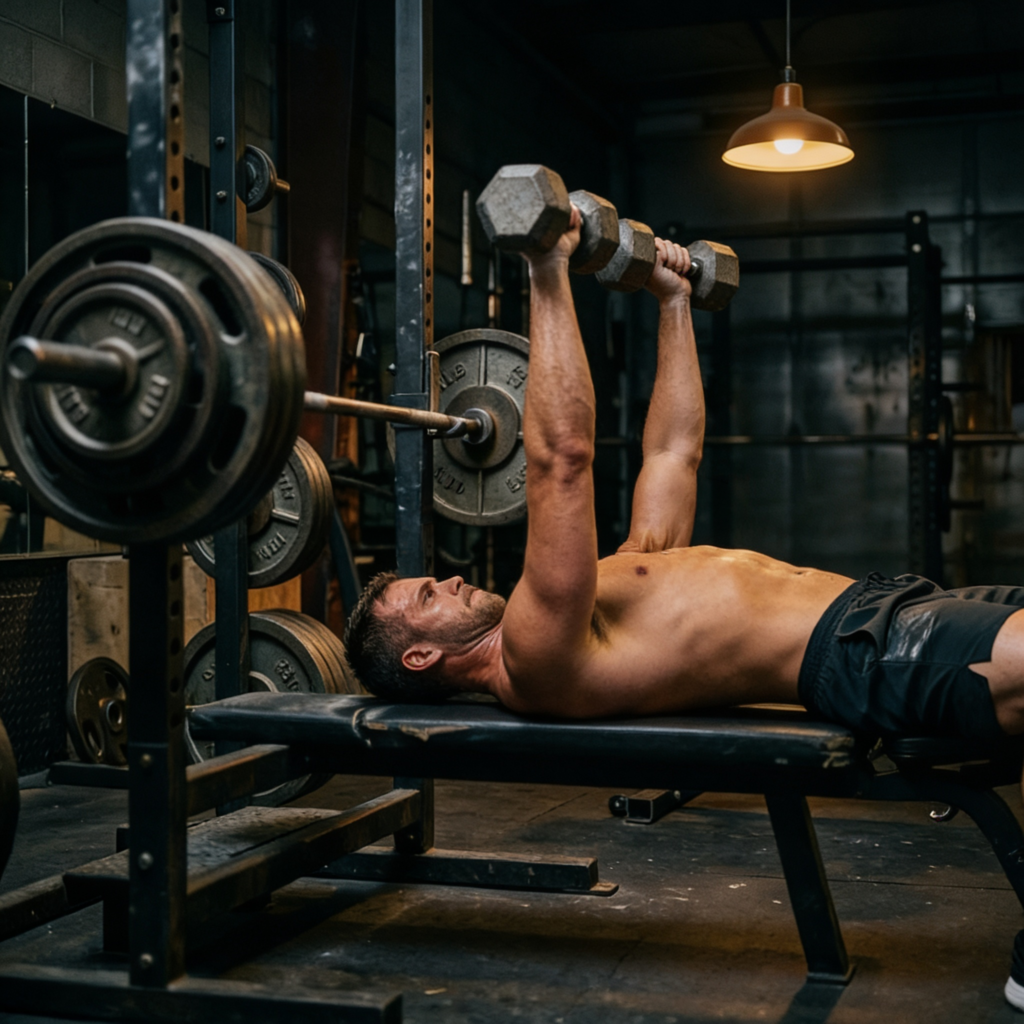
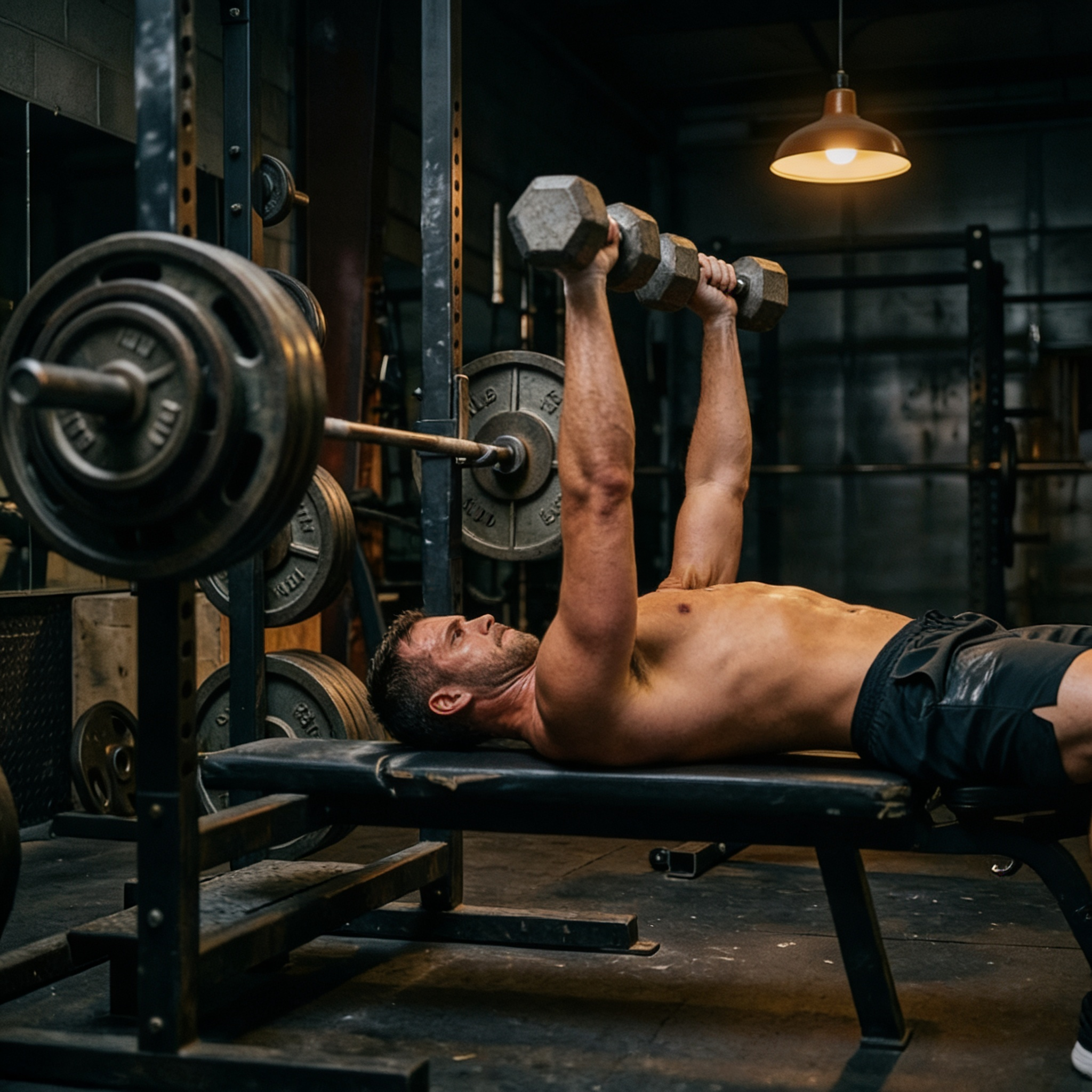
The barbell bench press is the king of chest exercises. Almost. There is one thing it physically cannot do — and that one thing is what builds the chest faster than anything else. A dumbbell chest workout exploits the gap. The hands move independently, the elbows travel below the rib cage at the bottom, and the arms can finally do what the chest is built to do: pull together at the top of every rep.
This is not a beginner-versus-advanced argument. It is a mechanical one. The barbell limits range and locks adduction out of the lift. Dumbbells fix both. Here is why that matters, and the six lifts that prove the point.
Why a Dumbbell Chest Workout Builds More Muscle
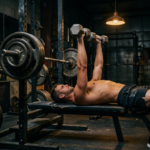
The pectoralis major is a horizontal adduction muscle. Its job is to pull the arm across the body, toward the midline. The barbell, by design, prevents that. The hands are locked at a fixed width. At the top of a barbell bench press, the arms are exactly as far apart as they were at the bottom. The chest contracts isometrically. It never finishes the contraction it exists to perform.
The bottom of the lift is the second problem. A barbell stops at the chest. The bar physically cannot travel any further down. The pecs are loaded, but they are not stretched to their full length. Dumbbells solve both problems in a single movement. The hands can drop below the line of the torso at the bottom, putting the muscle under load at its longest length. The hands can drift toward each other at the top, finishing the contraction.
This matters because of how muscle grows. A 2025 meta-analysis on muscle length and regional hypertrophy found that training at long muscle lengths produces meaningfully more growth than training at short muscle lengths, and the effect held across the muscles studied. The barbell bench gives you load. The dumbbell version gives you load through the position the muscle actually wants — and the research keeps pointing to that position as the one that matters most for growth.
The Six Lifts the Barbell Can’t Match
Three categories. Six lifts. Each one solves something a barbell mechanically cannot.
Stretch lifts: depth the barbell denies. The bottom of a press is where the muscle is at its longest and the load matters most. A barbell stops at the chest. These three go past that line.
Dumbbell Bench Press
Set up like a barbell bench, but lower the dumbbells until your elbows drop a few inches below your torso. That is the depth a barbell denies you. Press up, and at the top, drive the dumbbells slightly toward each other without letting them touch. Three to four sets of 8 to 12 reps. Heavier than your flyes, lighter than your barbell PR. The deeper stretch will humble your weight selection. Do not ego-press. Let the bottom feel uncomfortable — that is the point.
Incline Dumbbell Press
Set the bench at 30 degrees. Steeper than that and the front delts start running the show. The angle hits the upper chest — the part that lags on most lifters because flat barbell work neglects it. Same principle: drop the dumbbells past the plane of the torso, then press and converge at the top. The clavicular fibers of the pec respond especially well to incline work performed through full range. Three sets of 10 to 12.
Dumbbell Pullover
Lie crosswise on a bench, holding one dumbbell with both hands above your chest. Lower it back behind your head in a slow arc, keeping a slight elbow bend, until you feel a deep stretch across the chest and lats. The pullover puts the pec on stretch in a position no pressing movement can replicate. Treat it as a finishing move, not a strength lift. Three sets of 12 to 15. Lighter is better. The stretch is the point, not the weight.
Adduction lifts: the contraction the barbell prevents. The pec exists to pull the arm across the body. A locked grip cannot let it. These two give the chest what it was built to do.
Dumbbell Flye
The flye is horizontal adduction with no help. No triceps, no front delts pitching in — just the chest moving the arm across the body. Use a slight bend in the elbow, lower the dumbbells in a wide arc, feel the stretch across the chest, and bring them back together by pulling with the pecs, not the shoulders. Lighter weight than you think. Three sets of 12 to 15. The flye is where most lifters finally feel the muscle they have been trying to grow.
Squeeze Press
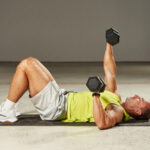
Hold two dumbbells together over your chest, hands neutral, dumbbells touching. Press the dumbbells into each other hard, and keep them pressed together for every rep. Lower slowly, push back up, never let the dumbbells separate. The constant inward pressure forces the chest to fire through the entire range. There is no off position. Three sets of 10 to 12. The pump is brutal in a way the bench press never produces, because the chest is contracting under tension on every inch of the lift.
Independence: what the barbell physically cannot do. One bar locks both arms together. One dumbbell does not. The exposure of weakness is the entire point.
Single-Arm Dumbbell Press
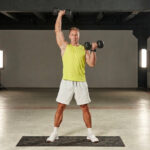
One dumbbell, one arm. The barbell cannot do this. The single-arm press exposes any side-to-side imbalance you have been carrying, and you have one. The off-side has to fire to stabilize the torso, which turns a chest lift into a chest, core, and anti-rotation lift in a single movement. Strict form: keep the bench flat, the hips down, the press vertical. Three sets of 8 to 10 per side. Train your weak side first, and only match those reps on the strong side.
How to Program a Dumbbell Chest Workout
The six lifts above are too many for a single session. Pick four. Lead with a heavy press — flat or incline — for three or four sets in the 8-to-12 range. Follow with a second press at a different angle. Finish with a flye or a pullover for stretch volume, and a squeeze press or single-arm work to expose weak points and bilateral imbalance.
Push your hardest sets close to failure on the presses. Stop two reps short on flyes and pullovers — the stretched position is where injuries happen if you grind. Total working sets between 12 and 16 per session is the productive range. More than that is fatigue collection, not muscle growth.
Twice-weekly chest training works better for most lifters than once. Split the lifts across two sessions: presses on day one, flyes and pullovers and unilateral work on day two. The chest recovers fast. Use that recovery instead of letting it sit idle for six days a week. A simple two-day split: day one — flat dumbbell bench, incline dumbbell press, single-arm dumbbell press; day two — squeeze press, dumbbell flye, dumbbell pullover. Heavy compound work first, stretch and contraction work second.
What Lifters Ask
How many days a week should I do a dumbbell chest workout?
Twice a week is the productive ceiling for most lifters. Once is enough to maintain. Three times only works on very low volume per session. Two days, separated by 48 to 72 hours, splits volume across fresh sessions and recovers fully before the next one.
Can a dumbbell chest workout replace the barbell bench press entirely?
For pure hypertrophy, yes. The barbell bench is a strength lift first and a chest-builder second. If chest growth is the goal, dumbbells beat the bar on stretch, contraction, and unilateral work. If you compete in powerlifting, the barbell stays in the program for sport-specific reasons.
What dumbbell weight should I start with?
Lighter than you think. The deeper stretch and free movement path make dumbbells feel heavier than the equivalent barbell load. A lifter who benches 185 pounds on the bar will rarely press 90-pound dumbbells for the same reps on the first attempt. Start conservative and add weight when form holds.
Do I need a flat bench, or will the floor work?
A bench is better for full range. The floor cuts range short, which is sometimes the point — shoulder rehab, elbow protection, lockout work. For maximum chest growth, a bench lets the elbows drop past the torso, and that is the entire reason to use dumbbells in the first place.
How long until I see results from a dumbbell chest workout?
Visible chest development in 8 to 12 weeks if training is hard, sleep is adequate, and protein intake sits around 0.7 to 1 gram per pound of bodyweight. Faster if untrained, slower if already advanced. Strength gains show up before visual change does.