A barbell is a generous tool. It lets your strong side carry your weak side and never tells you it happened. You finish the set, rack the weight, and walk away convinced you lifted what the plates said you lifted. You did. But not the way you think. Dumbbell workouts remove that generosity. Two independent loads mean two independent demands, and there is no shared bar to smuggle effort across. Whatever your weaker side cannot do, it does not do. Whatever your stronger side wants to overreach, it cannot. The weight stops being a number and starts being a verdict.
This is the case for training with dumbbells as your primary tool, not your accessory tool. Not because they are trendy, not because they are convenient, but because they tell the truth about your body in a way almost nothing else does.
What Dumbbell Workouts Actually Expose
Bilateral asymmetry — the strength gap between your left and right sides — is normal. Almost every lifter has one. Most never find out how large theirs is because they spend their training life under a barbell, where the stronger limb quietly compensates for the weaker one. The bar still moves. The rep still counts. The asymmetry stays hidden and, often, gets worse.
Pick up two dumbbells of equal weight and the hiding stops. Press them overhead and one arm will lock out before the other. Row them and one will pull cleaner. Lunge with them and one leg will wobble while the other holds. None of this is failure. It is information. The first honest dumbbell workout most lifters do is the most useful diagnostic they have ever run on themselves.
Single-limb loading recruits stabilizing musculature that bilateral lifts under-train, particularly through the trunk and hips. The body cannot rely on a rigid bar to organize itself in space. It has to organize itself. That organizing is the work.
Why Dumbbell Workouts Build a More Useful Body
Strength that exists only when both sides cooperate is fragile strength. Real life rarely loads you symmetrically. You carry a child on one hip. You haul a suitcase up stairs with one arm. You catch yourself on one leg when the curb surprises you. The body that handles these moments well is a body that has been trained to produce force on its own, one side at a time, against an unbalanced load.
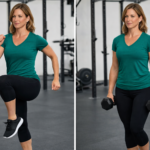
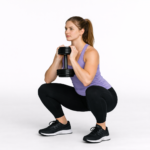
Dumbbell workouts train exactly that pattern. A dumbbell bench press demands shoulder stability the barbell version does not. A single-arm row asks your obliques and lower back to resist rotation while your lat does its job. A goblet squat punishes any forward lean your back squat lets you get away with. The lifts feel harder at lighter loads, and they should. They are doing more.
This is also why dumbbell training carries over to athletic movement more directly than pure barbell work. Unilateral loading patterns mirror the demands of running, throwing, cutting, and nearly every sport movement that involves single-limb force production. The National Strength and Conditioning Association has long emphasized unilateral training as a foundational element of athletic preparation precisely because of this carryover. Bilateral lifts build the engine. Unilateral lifts teach it to drive.
The Practical Architecture of an Honest Program
The temptation when switching to dumbbell-focused training is to treat it as barbell training with smaller equipment — same lifts, same structure, just with two implements instead of one. This misses the point entirely. The structure has to change because the demand has changed.
Train the weaker side first, and let it set the volume. If your left arm gets eight clean reps on the dumbbell shoulder press and your right arm could do ten, you do eight on both. The stronger side does not get rewarded for being stronger. It gets matched to the weaker side until the gap closes. This single rule, applied consistently, will do more for long-term symmetry than any corrective exercise routine.
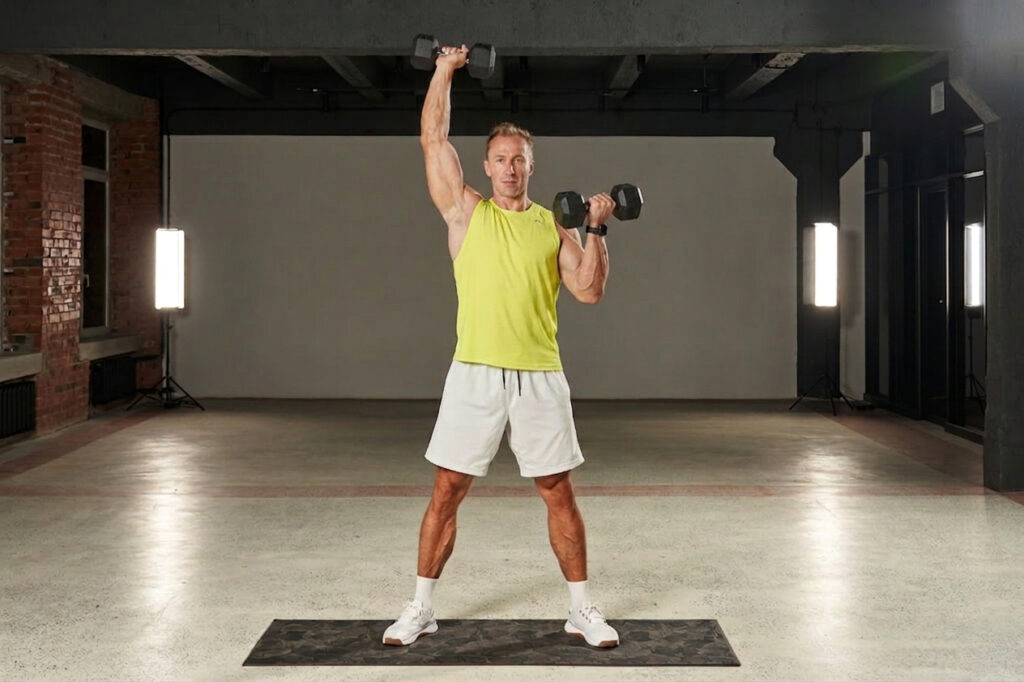
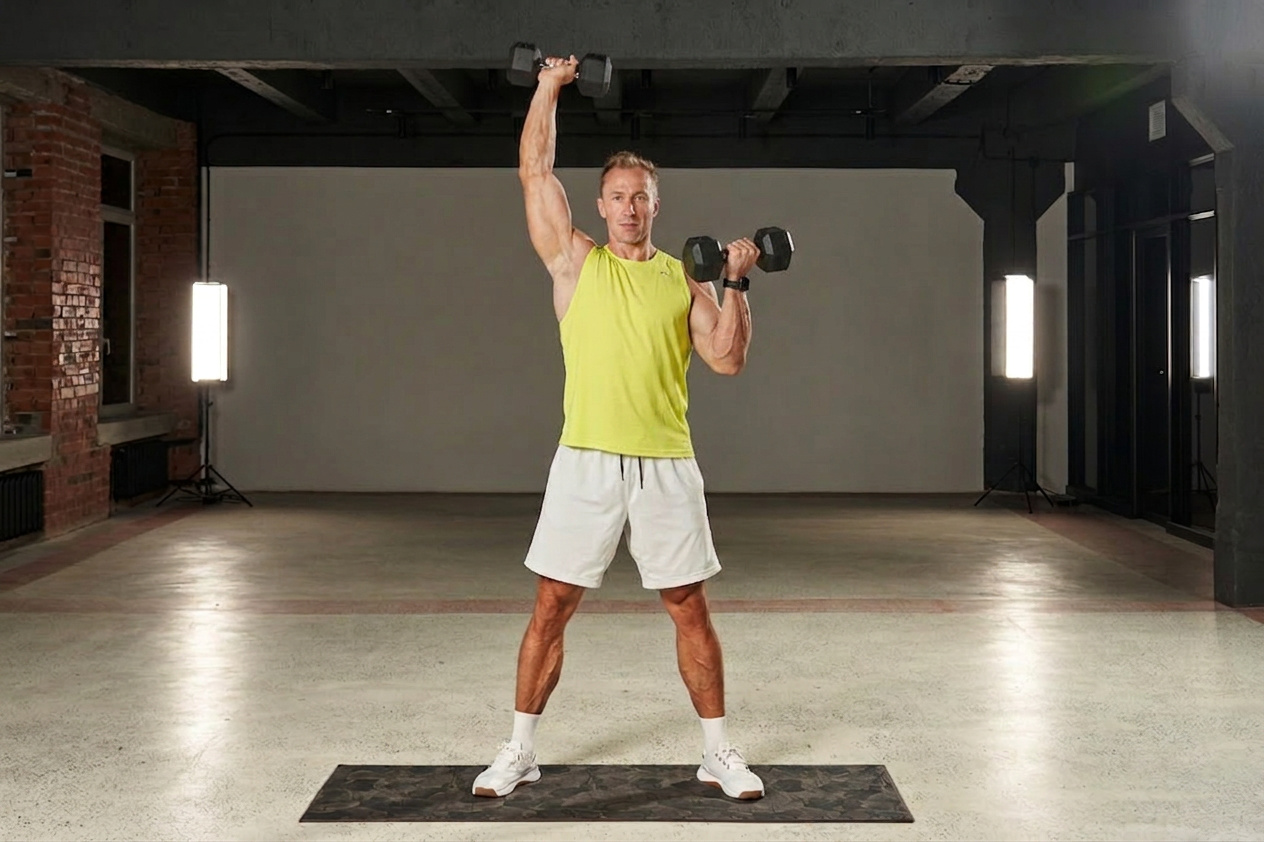
Use unilateral lifts as primary movements, not finishers. Single-arm dumbbell rows, single-leg Romanian deadlifts, split squats, and one-arm overhead presses belong at the front of your session when you are fresh, not tacked on at the end as accessory work. They are the work.
Pause where you would normally cheat. A two-second hold at the bottom of a goblet squat, the top of a row, or the lockout of a press removes momentum from the equation. Momentum is how the strong side smuggles effort to the weak side. Take it away and you find out what each limb actually owns.
Train through full ranges your barbell training avoids. A dumbbell bench press lets your arms travel deeper than a barbell allows. A dumbbell shoulder press lets your wrists rotate naturally instead of locking into a fixed position. Use the range. The whole point of the tool is the freedom it offers.
What Changes When You Train This Way
The first four to six weeks feel like regression. Loads are lighter. Sessions are slower. The lifts that used to feel automatic now feel awkward because your body is being asked to organize itself without the scaffolding the bar provided. This is not a sign the program is wrong. It is a sign the program is working. You are paying back debt your barbell training let you accumulate.
By week eight, the asymmetries narrow. By week twelve, the lifts that felt awkward feel like they belong to you. And when you go back to a barbell, you find that it has gotten easier — not because the bar changed, but because both sides of your body are now contributing what they should have been contributing all along.
Frequently Asked Questions About Dumbbell Workouts
Are dumbbell workouts enough on their own, or do I need a barbell too?
For the majority of lifters whose goals are strength, body composition, and athletic durability, dumbbell workouts can be a complete program. The ceiling on absolute maximal strength is lower than with a barbell — you will not deadlift 600 pounds with dumbbells — but for everything short of competitive powerlifting, the tool is sufficient. Many lifters get stronger faster on dumbbells precisely because they stop hiding from their weaknesses.
How heavy should the dumbbells be?
Heavy enough that the last two reps of your target rep range are genuinely hard, light enough that the weaker side can complete those reps with clean form. The weaker side sets the ceiling. If your right arm could press 50s for ten and your left can only do 45s for ten, you press 45s. Chasing the higher number on the stronger side is how the asymmetry got there in the first place.
How often should I do dumbbell workouts?
Three to four sessions per week is the sweet spot for most lifters. Unilateral work is more demanding on the nervous system than bilateral work because it requires more coordination and stabilization, so recovery matters more than frequency. Two well-structured dumbbell sessions will outperform five mediocre ones every time.
Will dumbbell workouts build muscle as effectively as barbell workouts?
Yes, and in some cases more effectively. Hypertrophy responds to mechanical tension, metabolic stress, and time under tension — all of which dumbbells produce well, often through longer ranges of motion than a barbell allows. The deeper stretch at the bottom of a dumbbell press or row is a hypertrophy advantage, not a disadvantage.
What is the most underrated dumbbell exercise?
The single-arm overhead carry. Pick up one heavy dumbbell, press it overhead, and walk. Your obliques, your shoulder stabilizers, your grip, and your posture all get tested at once, and there is no way to fake any of it. Two minutes of this exposes more about your body than an hour of machines.